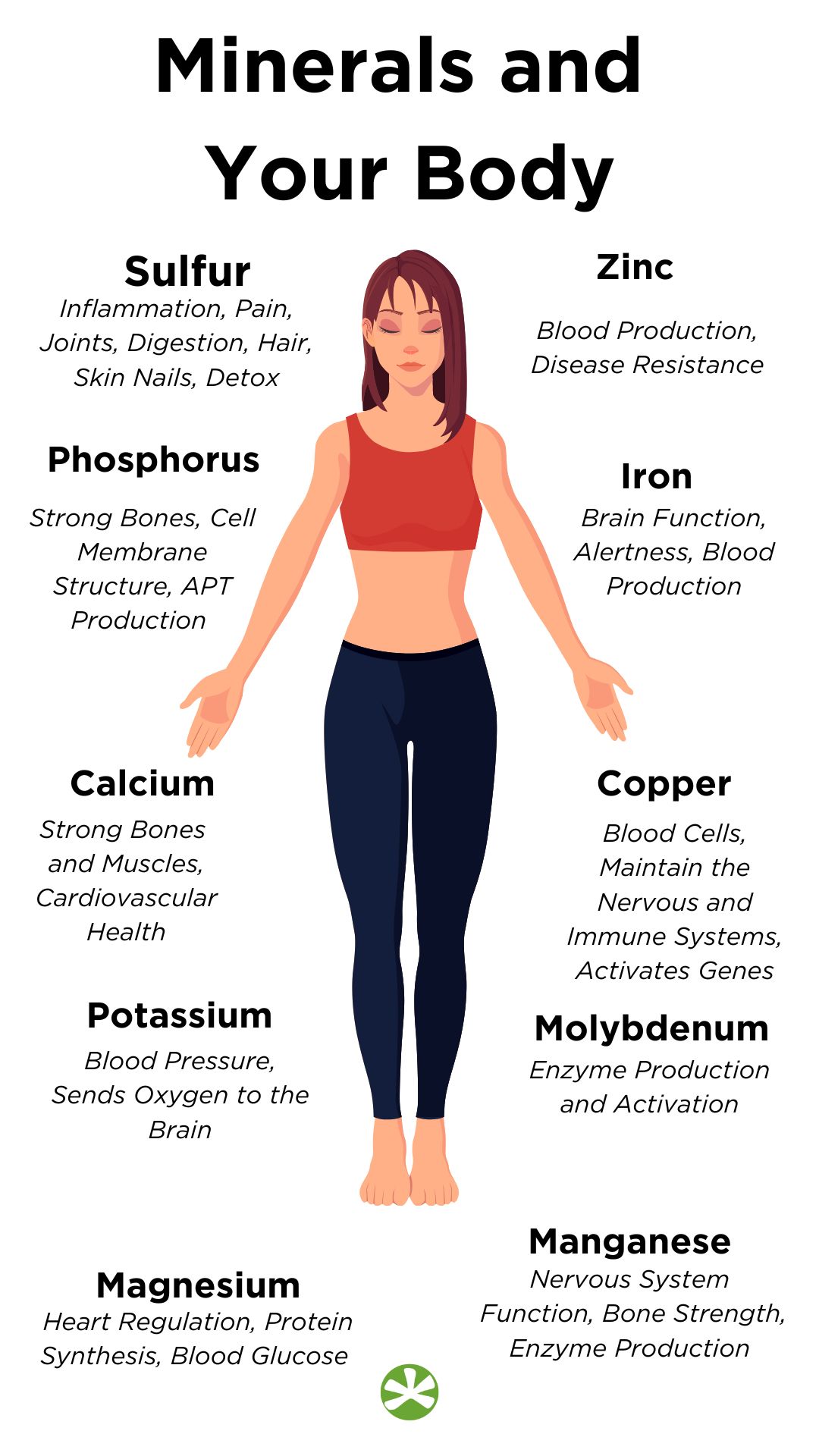



Minerals Image

Unlock the Power of Minerals for Optimal Health

Minerals are essential nutrients that the human body requires to function properly. Unlike vitamins, minerals are inorganic substances found naturally in the earth, water, and food we eat. They play a crucial role in maintaining overall health, supporting strong bones, healthy teeth, proper muscle function, and efficient nerve signaling. Minerals are also vital for producing enzymes, hormones, and maintaining a balanced metabolism.

Some minerals, like calcium, magnesium, and potassium, are needed in larger amounts, while trace minerals such as iron, zinc, and iodine are required in smaller quantities but are equally important. A deficiency in any essential mineral can lead to health problems such as fatigue, weakened immunity, or bone issues. Incorporating a variety of mineral-rich foods into your daily diet ensures that your body gets the nutrients it needs to stay healthy, energized, and strong. Understanding minerals is the first step toward achieving optimal wellness.

Boost Health Now
Start My Mineral Reset
Get Mineral Relief

What Are Minerals?

Minerals are naturally occurring inorganic substances that are essential for the proper functioning of the human body. Unlike vitamins, which are organic and can be broken down by heat or light, minerals retain their chemical structure and are obtained primarily through the foods we eat and the water we drink. Minerals play a crucial role in maintaining overall health, supporting a wide range of bodily functions.

For example, calcium and phosphorus are vital for building strong bones and teeth, while potassium and sodium help regulate fluid balance, nerve signals, and muscle contractions. Trace minerals, such as iron, zinc, and iodine, may be required in smaller amounts, but they are equally important for processes like oxygen transport, immune function, and thyroid regulation.

A balanced intake of minerals is essential to prevent deficiencies and related health problems, including fatigue, weakened immunity, poor bone health, and hormonal imbalances. Minerals also act as cofactors in enzyme reactions, helping the body metabolize nutrients efficiently and maintain energy levels throughout the day.

By including a variety of mineral-rich foods—such as fruits, vegetables, nuts, seeds, dairy, and seafood—in your diet, you can ensure that your body receives the essential minerals it needs. Understanding what minerals are and their role in health is the first step toward building a strong, healthy, and energized body.


Minerals-web

Importance of Minerals in Daily Life

Minerals are vital nutrients that our body cannot produce on its own, yet they are essential for maintaining overall health and well-being. Every cell, tissue, and organ in the body relies on minerals to function properly. From building strong bones to supporting the nervous system, minerals play a crucial role in daily life. A balanced intake of minerals ensures that the body remains energized, healthy, and resilient against diseases. Here are some key reasons why minerals are so important:

  • Support Bone and Teeth Health: Minerals like calcium and phosphorus strengthen bones and teeth, reducing the risk of fractures and dental issues.
  • Boost Muscle and Nerve Function: Potassium, sodium, and magnesium help muscles contract properly and support nerve signal transmission.
  • Enhance Immune System: Zinc, selenium, and iron help maintain a strong immune system, protecting the body from infections.
  • Aid Metabolism and Energy Production: Minerals act as cofactors for enzymes, helping the body convert food into energy efficiently.
  • Regulate Fluids and Hormones: Sodium, potassium, and iodine maintain fluid balance and support healthy hormone production.

Incorporating a variety of mineral-rich foods into your daily diet ensures that your body receives these essential nutrients. Understanding the importance of minerals can help you make healthier choices and maintain a strong, active, and balanced life.

Minerals-web

Types of Minerals and Their Roles

Minerals are essential nutrients that our body needs to perform a variety of critical functions. They are classified into two main categories based on the amount required by the body: macro minerals and trace minerals. Understanding the types of minerals and their roles can help you maintain a healthy, balanced diet and overall well-being.


1. Macro Minerals: Macro minerals are required in larger amounts and are crucial for maintaining basic bodily functions.

  • Calcium: Strengthens bones and teeth, supports muscle function, and aids in blood clotting.
  • Magnesium: Helps with muscle relaxation, nerve signaling, and energy production.
  • Potassium: Maintains fluid balance, supports heart health, and regulates blood pressure.
  • Sodium: Essential for nerve function and maintaining fluid balance.
  • Phosphorus: Works with calcium to build strong bones and teeth and supports energy metabolism.

2. Trace Minerals: Trace minerals are needed in smaller amounts but are equally vital for health.

  • Iron: Essential for red blood cells and oxygen transport.
  • Zinc: Boosts immunity, promotes wound healing, and supports growth.
  • Iodine: Necessary for thyroid function and hormone production.
  • Selenium: Acts as an antioxidant and protects cells from damage.
  • Copper & Manganese: Support enzyme functions and overall metabolism.

Both macro and trace minerals are critical for daily health, and a balanced intake from foods ensures that the body functions optimally. Including a variety of mineral-rich foods in your diet helps prevent deficiencies and promotes long-term wellness.

Why Minerals Matter for a Healthy Life

Minerals are essential nutrients that play a vital role in maintaining a healthy and balanced life. They are inorganic substances naturally found in the earth, water, and food, and they are crucial for the proper functioning of every cell, tissue, and organ in the body. Without adequate minerals, the body cannot perform critical functions such as building strong bones, transmitting nerve signals, producing hormones, or supporting the immune system.

For example, calcium and phosphorus work together to maintain strong bones and teeth, while magnesium and potassium regulate muscle function and heartbeat. Trace minerals like iron, zinc, and selenium support oxygen transport, immunity, and protect the body from oxidative stress. Minerals also act as cofactors for enzymes, which are necessary for metabolism, energy production, and the breakdown of nutrients.

A deficiency in minerals can lead to serious health issues such as fatigue, weakened immunity, brittle bones, hair loss, or hormonal imbalances. On the other hand, maintaining a balanced intake of minerals through a diet rich in fruits, vegetables, nuts, seeds, dairy, and seafood can enhance overall health, boost energy levels, and promote longevity.

Understanding why minerals matter is essential for anyone seeking to improve their health naturally. By incorporating a variety of mineral-rich foods into daily life, you provide your body with the essential nutrients it needs to stay strong, energized, and resilient against diseases. Minerals are truly the foundation of a healthy life.

Minerals-web

Top Health Benefits of Minerals

Minerals are essential nutrients that our body needs to function properly and maintain overall health. They support a wide range of physiological processes, from building strong bones to boosting immunity and improving energy levels. Incorporating a variety of mineral-rich foods into your daily diet ensures that your body receives these vital nutrients. Here are the top 8 health benefits of minerals:

1. Strengthen Bones and Teeth: Minerals like calcium and phosphorus are critical for developing and maintaining strong bones and healthy teeth, reducing the risk of fractures and dental problems.

2. Improve Muscle and Nerve Function: Potassium, magnesium, and sodium regulate muscle contractions and nerve signal transmission, helping muscles work efficiently and preventing cramps.

3. Boost Immune System: Zinc, selenium, and iron enhance immune function, helping the body fight infections and recover faster from illnesses.

4. Support Energy Production: Minerals act as cofactors for enzymes that metabolize food into energy, keeping the body active and energized throughout the day.

5. Maintain Fluid and Electrolyte Balance: Sodium, potassium, and chloride help regulate fluid balance, blood pressure, and hydration, ensuring proper body function.

6. Aid Hormone Production: Iodine and zinc are essential for thyroid function and hormone regulation, which control metabolism, growth, and reproductive health.

7. Protect Against Oxidative Stress: Selenium and copper act as antioxidants, neutralizing free radicals and reducing cell damage.

8. Support Overall Metabolism: Magnesium, manganese, and other trace minerals are involved in hundreds of metabolic reactions, contributing to healthy digestion, brain function, and overall wellness.

Including a variety of minerals in your diet is key to achieving optimal health, maintaining energy, and ensuring the body functions efficiently every day.

Common Signs of Mineral Deficiency

Minerals are essential nutrients that support nearly every function in the human body, from building strong bones to maintaining energy and immunity. When the body lacks sufficient minerals, it can lead to serious health issues over time. Recognizing the common signs of mineral deficiency helps in taking timely action to restore balance and maintain overall health.

1. Chronic Fatigue and Weakness: A deficiency in key minerals like iron, magnesium, or potassium can significantly reduce energy production in the body. Iron deficiency leads to fewer red blood cells, reducing oxygen transport to tissues and causing persistent tiredness. Low magnesium and potassium levels can also impair muscle function and metabolism, making everyday tasks feel exhausting.

2. Frequent Muscle Cramps and Spasms: Insufficient magnesium and potassium can disrupt normal muscle contraction and relaxation. This often results in painful muscle cramps, spasms, or twitching, especially after physical activity or even during rest. Calcium deficiency can also contribute to muscle stiffness and spasms.

3. Weak Bones and Dental Issues: Minerals like calcium and phosphorus are vital for maintaining strong bones and teeth. Lack of these minerals over time can lead to brittle bones, osteoporosis, tooth decay, and increased susceptibility to fractures.

4. Poor Immune System and Slow Healing: Deficiencies in zinc, selenium, and iron can weaken the immune system. A weakened immune system makes the body more prone to infections, slows down wound healing, and increases the risk of chronic illnesses.

5. Hair, Skin, and Nail Problems: A shortage of essential minerals can affect skin, hair, and nail health. Zinc deficiency may cause hair loss, brittle nails, and dry or flaky skin. Iron deficiency can lead to hair thinning and pale skin, while copper deficiency can affect pigmentation and overall skin appearance.

6. Hormonal Imbalances and Thyroid Issues: Iodine and selenium deficiencies can interfere with proper thyroid function, leading to hormonal imbalances. This can result in mood swings, unexplained weight gain or loss, fatigue, and other metabolic problems.

7. Numbness, Tingling, and Nerve Problems: Low levels of calcium, magnesium, and potassium can affect nerve signaling, resulting in tingling sensations, numbness, or muscle weakness. Chronic deficiencies may even contribute to nerve damage over time.

8. Mineral and Metabolic Problems: Minerals like magnesium, manganese, and zinc are essential for enzyme activity and digestion. Deficiency can cause poor digestion, bloating, irregular bowel movements, and reduced nutrient absorption, affecting overall metabolism.

Ensuring a diet rich in mineral-dense foods can prevent these health issues. Paying attention to early signs of mineral deficiencies helps maintain energy, immunity, and overall well-being for a healthier life.

Best Natural Sources of Minerals

Minerals are essential nutrients that our body needs to function optimally, but they cannot be produced naturally inside the body. Therefore, obtaining them from natural food sources is crucial for maintaining overall health, energy, and immunity. Including a variety of mineral-rich foods in your daily diet ensures that your body receives the right balance of nutrients needed for strong bones, healthy muscles, proper nerve function, and overall well-being.

1. Dairy Products:
Milk, cheese, and yogurt are excellent sources of calcium and phosphorus, which are essential for strong bones and teeth. Dairy products also provide magnesium and potassium, supporting muscle and nerve functions.

2. Leafy Green Vegetables:
Spinach, kale, and broccoli are rich in calcium, magnesium, and iron. These minerals help with bone health, energy production, and oxygen transport throughout the body.

3. Nuts and Seeds:
Almonds, cashews, pumpkin seeds, and sunflower seeds are packed with magnesium, zinc, and copper. These minerals support immunity, skin health, and metabolic processes.

4. Whole Grains:
Oats, quinoa, brown rice, and whole wheat contain magnesium, manganese, and selenium. Whole grains also aid digestion, regulate blood sugar, and provide steady energy.

5. Seafood:
Fish, shrimp, and shellfish are rich in iodine, zinc, and selenium, which are vital for thyroid function, immunity, and antioxidant protection.

6. Legumes:
Beans, lentils, and chickpeas are excellent sources of iron, magnesium, and potassium. They support energy production, cardiovascular health, and overall metabolis

7. Fruits:
Bananas, oranges, and avocados provide potassium and magnesium, which help maintain fluid balance, muscle function, and heart health.

8. Eggs:
Eggs contain selenium, iodine, and phosphorus, supporting thyroid health, bone strength, and energy production.

Including these natural sources of minerals in your diet ensures your body gets the essential nutrients it needs to stay strong, energized, and healthy. A balanced and diverse diet is the key to preventing deficiencies and maintaining long-term wellness.

How to Maintain the Right Mineral Balance

Maintaining the right balance of minerals in your body is essential for overall health, energy, and proper functioning of organs and tissues. Minerals are required for strong bones, healthy muscles, proper nerve signaling, immune support, and metabolism. An imbalance—whether too little or too much—can lead to fatigue, weakened immunity, or chronic health problems. Fortunately, by following simple dietary and lifestyle strategies, you can ensure your body receives the right amount of essential minerals every day.

1. Eat a Balanced and Diverse Diet:
Include a wide variety of foods such as dairy, leafy greens, whole grains, nuts, seeds, legumes, seafood, and fruits. Different foods provide different minerals, so diversity ensures your body gets everything it needs.

2. Focus on Whole and Unprocessed Foods:
Whole foods retain their natural mineral content better than processed foods. Avoid excessive processed or refined products, as they often lack essential minerals.

3. Stay Hydrated with Mineral-Rich Water:
Drinking natural mineral water or water from safe sources can provide additional minerals like calcium, magnesium, and potassium, supporting hydration and electrolyte balance.

4. Monitor Portion Sizes and Nutrient Intake:
Overconsumption of certain minerals can be harmful. For example, too much sodium can raise blood pressure, while excessive iron may cause toxicity. Balance is key.

5. Consider Natural Supplements When Needed:
In some cases, dietary intake may not meet your mineral requirements. Consult a healthcare professional to determine if mineral supplements are necessary for your health.

6. Maintain a Healthy Lifestyle:
Regular exercise, adequate sleep, and stress management improve how your body absorbs and utilizes minerals, ensuring optimal health benefits.

>By following these practices, you can maintain the proper balance of minerals in your body, supporting strong bones, a healthy heart, improved immunity, and overall wellness for a long and healthy life.

Conclusion

Minerals are fundamental nutrients that play a critical role in maintaining overall health and well-being. From supporting strong bones and teeth to regulating muscle and nerve function, hormones, and immunity, minerals are involved in nearly every process in the human body. A balanced intake of minerals ensures that the body has the resources it needs to produce energy, fight infections, maintain proper metabolism, and prevent chronic health problems.

Incorporating a variety of mineral-rich foods such as leafy greens, nuts, seeds, dairy, whole grains, fruits, seafood, and legumes into your daily diet is the most effective way to meet your mineral requirements naturally. Additionally, staying hydrated, monitoring nutrient intake, and maintaining a healthy lifestyle enhance the body’s ability to absorb and utilize minerals efficiently.

Understanding the importance of minerals and ensuring a consistent supply through diet and healthy habits is essential for long-term wellness. By prioritizing minerals, you support a strong, energized, and balanced body, laying the foundation for a healthier and more vibrant life.

FAQs About Minerals

1. What are minerals, and why are they important?

Minerals are naturally occurring inorganic substances that the body needs to function properly. They are essential for building strong bones, maintaining teeth health, supporting nerve and muscle function, producing hormones, and regulating metabolism. Without adequate minerals, the body may suffer from fatigue, weak immunity, or chronic health issues.


2. How many types of minerals are there?

Minerals are generally classified into two types: macro minerals, which the body needs in larger amounts (like calcium, magnesium, and potassium), and trace minerals, which are required in smaller amounts (like iron, zinc, and selenium). Both types are essential for overall health.


3. What are the top sources of minerals?

Minerals are found in a variety of foods such as leafy green vegetables, nuts, seeds, dairy products, whole grains, seafood, legumes, fruits, and eggs. Drinking mineral-rich water can also contribute to daily mineral intake.


4. Why are minerals essential for bone health?

Calcium, phosphorus, and magnesium are crucial for maintaining strong bones and teeth. Adequate intake of these minerals reduces the risk of fractures, osteoporosis, and dental issues while supporting proper bone growth and density.


5. How do minerals help in energy production?

Minerals act as cofactors for enzymes that convert food into energy. Magnesium, iron, and manganese play a key role in metabolic reactions, ensuring that your body stays active and energized throughout the day.


6. Can minerals boost immunity?

Yes, minerals like zinc, selenium, and iron enhance immune function. They help the body fight infections, reduce inflammation, and improve recovery from illnesses, keeping the immune system strong and responsive.


7. How do minerals support muscle and nerve function?

Potassium, magnesium, calcium, and sodium regulate muscle contractions and nerve signaling. This ensures smooth movement, prevents cramps, and maintains proper heart rhythm and overall nervous system health.


8. What are the signs of mineral deficiency?

Common signs include fatigue, muscle cramps, brittle nails, hair loss, weakened immunity, poor bone health, tingling sensations, Mineral issues, and hormonal imbalances. Early detection helps prevent long-term complications.


9. Can minerals help with mental health?

Yes, minerals like magnesium, zinc, and iron support brain function, improve focus, reduce stress, and regulate neurotransmitter activity. Adequate mineral intake can contribute to better mood and cognitive performance.


10. How do minerals regulate fluids in the body?

Sodium, potassium, and chloride maintain fluid balance, blood pressure, and electrolyte levels. Proper fluid regulation is essential for hydration, kidney function, and overall cellular health.


11. Are minerals important for children?

Absolutely. Minerals like calcium, phosphorus, and iron are vital for proper growth, bone development, brain function, and immunity in children. A mineral-rich diet supports healthy growth and long-term wellness.


12. Can minerals prevent chronic diseases?

Yes, minerals play a role in preventing conditions such as osteoporosis, anemia, high blood pressure, and metabolic disorders. Adequate mineral intake helps maintain overall health and reduces disease risk.


13. Which minerals are best for heart health?

Potassium, magnesium, calcium, and selenium support heart function by regulating blood pressure, maintaining heart rhythm, and reducing oxidative stress on cardiovascular tissues.


14. How can vegetarians get enough minerals?

Vegetarians can obtain minerals from leafy greens, legumes, nuts, seeds, whole grains, fortified plant-based products, and mineral-rich water. Including a variety of plant-based foods ensures adequate intake of all essential minerals.


15. Can minerals improve skin, hair, and nails?

Yes, minerals like zinc, iron, and copper promote healthy hair growth, strengthen nails, and improve skin appearance. They also protect against oxidative stress and inflammation that can affect skin health.


16. How do trace minerals differ from macro minerals?

Macro minerals are required in larger quantities for functions like bone and muscle support, while trace minerals are needed in smaller amounts but are critical for enzymatic reactions, immune health, and hormone production.


17. Can drinking water provide minerals?

Yes, natural mineral water contains calcium, magnesium, and other essential minerals. Drinking mineral-rich water contributes to hydration and overall mineral balance in the body.


18. Are mineral supplements necessary?

Supplements may be helpful if dietary intake is insufficient. However, it’s best to consult a healthcare professional before taking supplements to avoid imbalances or excessive intake, which can be harmful.


19. How do minerals support thyroid function?

Iodine and selenium are crucial for thyroid hormone production, which regulates metabolism, growth, and energy levels. Deficiencies can lead to thyroid disorders and hormonal imbalances.


20. Can minerals improve digestion and metabolism?

Yes, magnesium, manganese, and zinc aid enzyme function, support nutrient absorption, and regulate Mineral processes, ensuring efficient metabolism and energy production.